Hesperos Inc., pioneers of the Human-on-a-Chip® in vitro system, today announced the publication of a new peer-reviewed publication that describes how the company’s technology can be used to investigate immune responses following treatment with biological therapeutics for multi-organ systemic diseases, including cancer, infectious diseases and inflammatory disorders. The study was part of a collaboration between Hesperos, Hoffman-La Roche Pharmaceuticals and the University of Central Florida. The manuscript, titled “Differential Monocyte Actuation in a Three-Organ Functional Innate Immune System-on-a-Chip,” was published today in the prestigious journal Advanced Science.
The immune system plays an important role in coordinating with other organ systems to combat infection, eliminate damaged cells and repair tissue. However, modeling immune response following drug treatment in preclinical studies is challenging due to poor predictability, especially for the innate portion of the system. As the scientific community begins to turn more towards using multi-organ, human-on-a-chip systems as a cost-effective way to increase efficiency and lower toxicity, many of these models lack a systemic immune component.
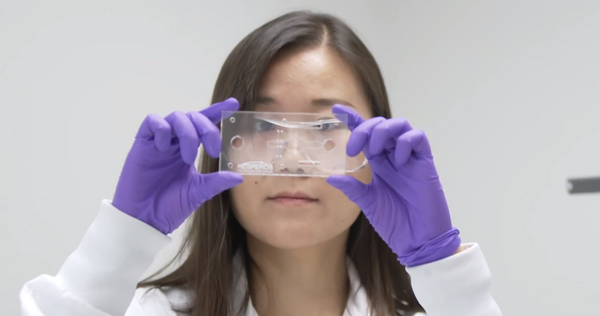
Hesperos, in collaboration with Hoffmann-La Roche Pharmaceuticals, describe an in vitro, pumpless, three-organ system containing functional human cardiomyocytes, skeletal muscle and hepatocytes in a serum-free medium, along with recirculating human monocyte THP-1 immune cells. Monocytes are a vital immune system cells involved in wound healing, pathogen clearance and activation of the innate immune response, but are also responsible for the cytokine storm found in conditions such as sepsis.
“One application where the immune-system-on-a-chip can be immediately useful is for uncovering how severe acute respiratory syndrome coronavirus 2 (SARS-CoV-2) directly affects multi-organ systems by activating the cytokine storm from inflammatory macrophages and to support the rapid development of therapeutics. As the global pandemic of COVID-19 continues to grow, this system has the potential to quickly evaluate antiviral and repurposed drugs to help combat this devastating disease,” said Michael L. Shuler, Ph.D., Chief Executive Officer of Hesperos.
In the study, the researchers evaluated two different innate immune responses: 1) targeted immune response following tissue-specific damage, which simulates indirect activation of THP-1 cells and, 2) pro-inflammatory immune response following direct activation of immune cells, mimicking acute inflammation and the cytokine storm. Though not reported in this study, Hesperos has also shown that peripheral blood mononuclear cells (PBMCs) and T-cells are sustainable in these multi-organs systems, which would allow some aspects of adaptive immunity to also be modeled.
In the targeted immune response experiments, the cardiotoxic compound amiodarone was used to selectively damage cardiac cells to evaluate how THP-1 immune cells affect the three-organ system. The presence of both amiodarone and THP-1 immune cells led to a more pronounced reduction in cardiac force, conduction velocity and beat frequency compared to amiodarone alone. THP-1 cells were also found to infiltrate the damaged cardiomyocytes and induce significantly increased cytokine IL-6 expression, indicating an M2 macrophage phenotype. No immune-activated damage was reported in the skeletal muscle or liver cells.
“The most striking features of our immune-system-on-a-chip is that it emulates different immune reactions for direct tissue-damage and acute inflammation, as well as distinguishes between M1 vs. M2 macrophage phenotypes,” said James Hickman, Ph.D., Chief Scientist at Hesperos and Professor at the University of Central Florida.
The study was initially funded by Roche Pharmaceuticals and completed under an NIH grant from National Center for Advancing Translational Sciences’ (NCATS) Small Business Innovation Research program, which supports studies to advance tissue chip technology toward commercialization.
“Tissue chips are a promising technology for accelerating the preclinical timeline and getting treatments to patients more efficiently,” said Danilo A. Tagle, Ph.D., associate director for special initiatives at NCATS. “Finding improved ways to study immune responses has tremendous implications for drug discovery and the development of more effective personalized medicines in diseases that affect multiple organ systems.”
In the pro-inflammatory response experiments, the three-organ system was exposed to lipopolysaccharide (LPS) and interferon gamma (IFN-γ) to stimulate acute inflammation/cytokine storm and provoke monocyte differentiation and activation. In the absence of THP-1 immune cells, LPS/IFN-γ treatment had no significant effect on function of the three-organ system. However, with the addition of THP-1 immune cells, LPS/IFN-γ treatment caused cellular damage to all three-organ components, including THP-1 cell infiltration in liver tissue, and led to significant alterations in cardiac force and beat frequency, as well as skeletal muscle force. Additionally, there was an upregulation of pro-inflammatory cytokines, including TNF-α, IL-6 and IL-10, indicating an M1 macrophage phenotype, which is analogous to the cytokine storm found during certain reactions to biologic therapeutics and emulates what occurs during sepsis.
To read the full manuscript, please visit https://doi.org/10.1002/advs.202000323.
About Hesperos
Hesperos, Inc. is a leader in efforts to characterize an individual’s biology with Human-on-a-Chip microfluidic systems. Founders Michael L. Shuler and James J. Hickman have been at the forefront of every major scientific discovery in this realm, from individual organ-on-a-chip constructs to fully functional, interconnected multi-organ systems. With a mission to revolutionize toxicology testing as well as efficacy evaluation for drug discovery, the company has created pumpless platforms with serum-free cellular mediums that allow multi-organ system communication and integrated computational PKPD modeling of live physiological responses utilizing functional readouts from neurons, cardiac, muscle, barrier tissues and neuromuscular junctions as well as responses from liver, pancreas and barrier tissues. Created from human stem cells, the fully human systems are the first in vitro solutions that accurately utilize these platforms to predict in vivo functions without the use of animal models, as featured in Science. More information is available at https://hesperosinc.com
Hesperos and Human-on-a-Chip are trademarks of Hesperos Inc. All other brands may be trademarks of their respective holders.